AI services 2026: rating of the best tools for chat, images, video
Below is our rating of AI services in 2026. It answers one practical question: given the same job — a chat with an AI assistant, generating images, video, voiceover, or talking avatars — which neural networks actually deliver the best result most often, and on what terms you can use them from anywhere. The list is revised as new models ship; the criteria and a legal methodology disclaimer are in the text itself, so you can judge what this ranking rests on.
How we compiled the rating
We are the NeuralSpace blog editorial team, and this is an author list, not a paid one: positions are not for sale and platforms do not pay for a line (advertising slots are handled separately). The criteria are simple and repeatable: result quality on a typical task of the month, availability and onboarding (no VPN needed, fast start, a clear interface), price and transparent billing (free tiers, subscriptions, or token-based pay-as-you-go), and stability — the share of successfully completed generations and the wait for a result. Every revision is dated; the next one is planned for March 2027.
Chat with an AI assistant
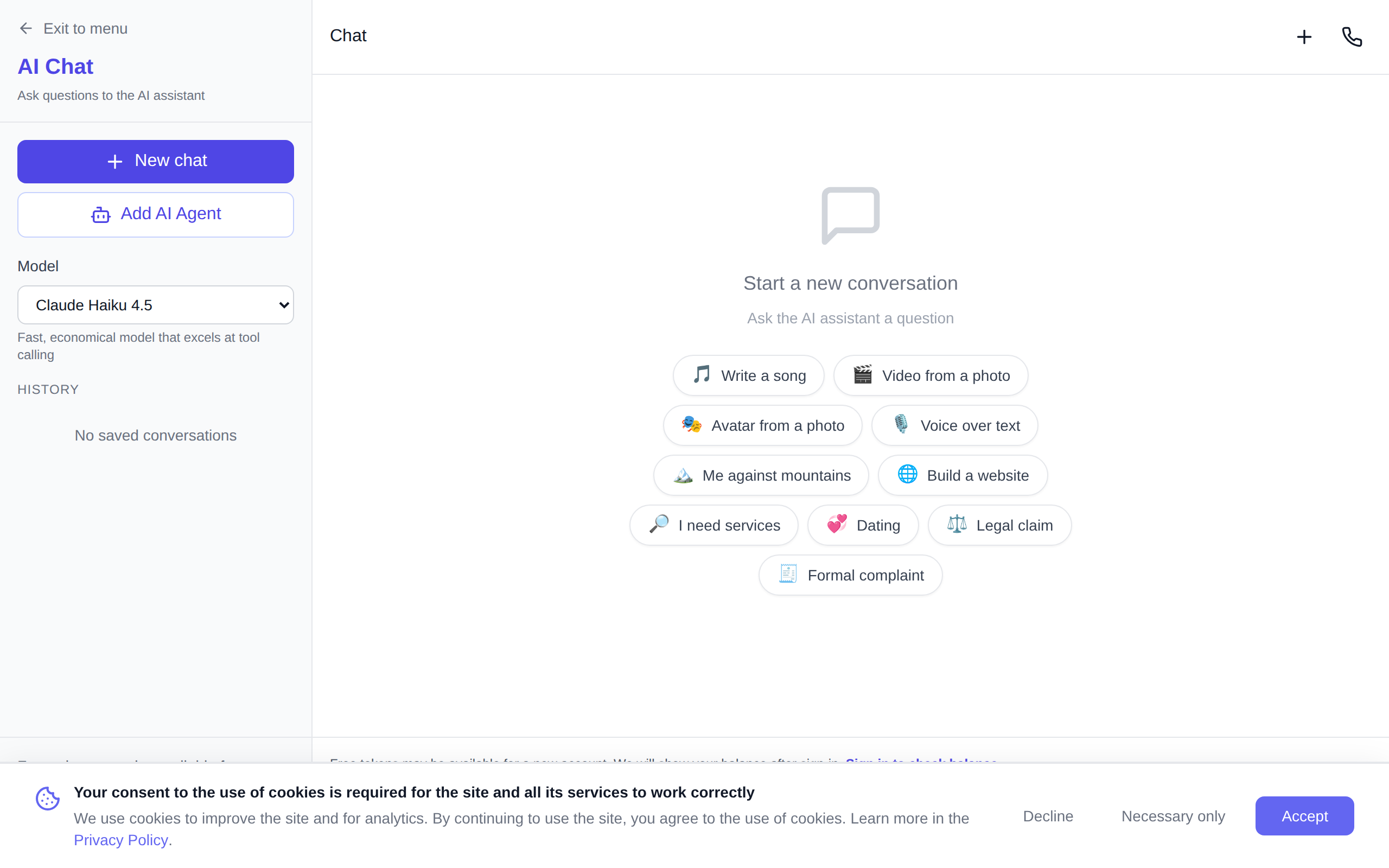
The three names that most often gave the best answer in 2026: ChatGPT (OpenAI) — a universal assistant for writing, research, and daily tasks; Claude (Anthropic) — long documents, deep analysis, and large context windows; Gemini (Google) — a fast multimodal model. DeepSeek earns a nod as an open model that wins on technical tasks and cost. The catch is the same for all: each top model has its own subscription, account, and regional access. In NeuralSpace Chat the leading models sit in one window — one login, token-based billing, no VPN — so "the best neural networks" stay side by side instead of a permanent either-or choice.
Image generation
For artistic images, Midjourney is most often praised; for photorealism and editing, Seedream and FLUX; for open-weight models, the Hugging Face ecosystem. When you need many different images (references, product shots with transparent backgrounds, text illustrations), one interface with hundreds of models is cheaper: the NeuralSpace image generator runs in the browser, grants starter tokens after registration, and bills only successful tasks.
Video generation
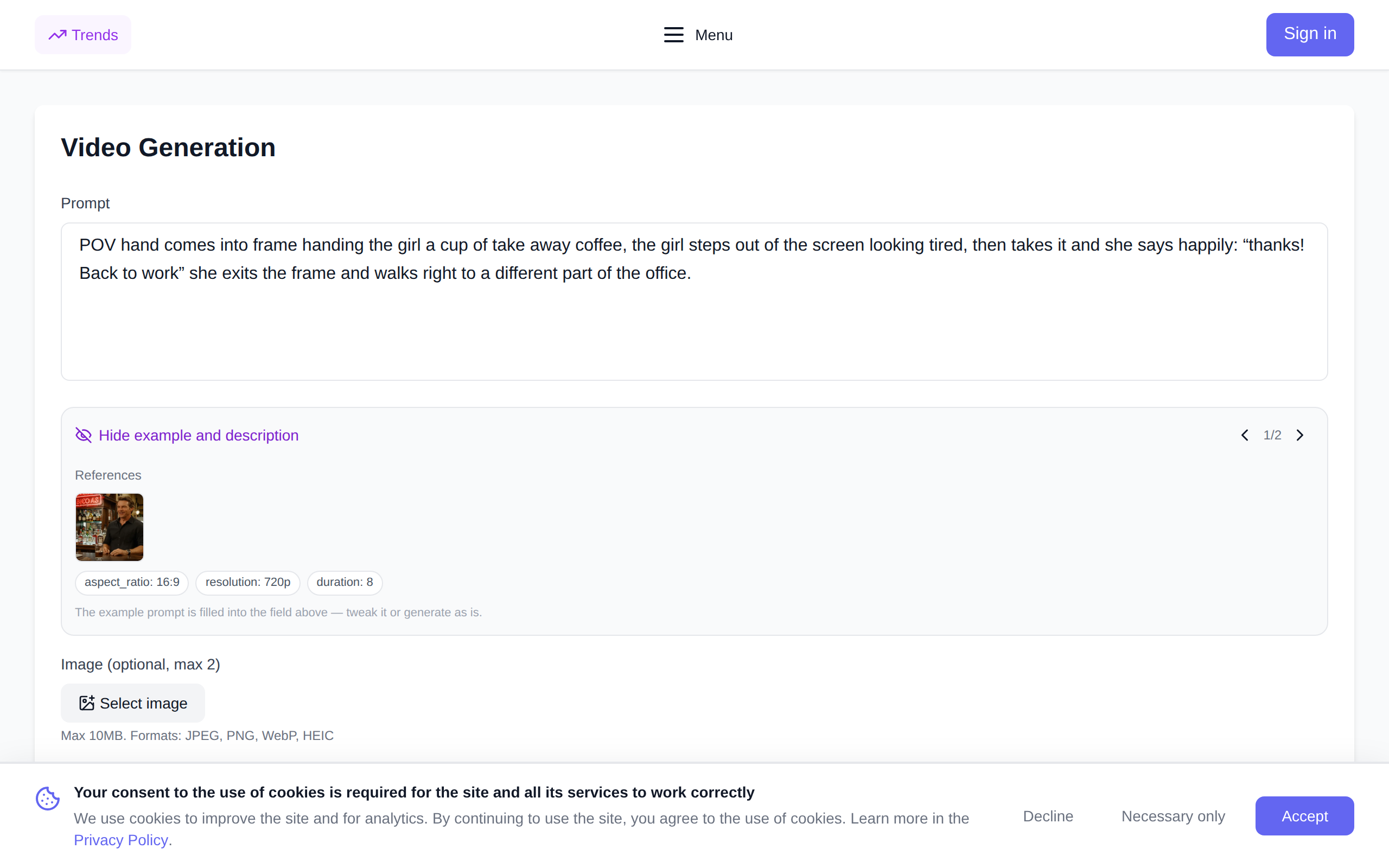
The year circled around three lines: Sora 2 (OpenAI) for dramaturgy and dialogue in clips, VEO 3.1 (Google) for realistic scenes with sound, Kling 3.0 for camera control and longer takes. All three are available in our video generator in the same window as chat and images, so you can compare results on your own task in five minutes instead of juggling five subscriptions.
Voice, avatars, and video translation
ElevenLabs remains the reference for voice and voice cloning, HeyGen for talking avatars for business, MMAudio for putting sound onto clips. In NeuralSpace, text-to-speech, talking avatars, and video translation with voice change sit next to each other — same account, same tokens, no separate subscription per task.
What it costs
Each leader has its own billing model: subscriptions from $8–10 per month for some, hourly credits for others. If you try many tools, tokens are the universal answer: you pay only for what you actually generated and never for an idle month. NeuralSpace runs on tokens, starter tokens come after registration, and only successfully completed tasks are billed.
FAQ
Which AI service is best in 2026?
It depends on the task: for text — ChatGPT and Claude, for multimodal work — Gemini, for images — Midjourney and Seedream, for video — Sora 2, VEO 3.1, and Kling 3.0. With mixed tasks, one aggregator makes more sense: all neural networks in one window at NeuralSpace.
Can I try it for free?
Most services have free tiers or trials; NeuralSpace grants starter tokens after registration, enough for first runs of chat, images, and video.
What does token-based billing mean?
A token is a unit of compute usage. You hold a token balance, each generation draws a fixed share, and only successful results are billed — an idle period costs nothing.
How often is the rating updated?
It is revised after major releases and at least twice a year; the next revision is March 2027. The current version was compiled in November 2026.
Methodology disclaimer
This rating was prepared by the NeuralSpace blog editorial team based on our own testing, anonymized platform statistics, and public reviews. It is informational, is not professional advice, and carries no guarantee of a specific result. Third-party service names are trademarks of their owners; mentions imply neither partnership nor sponsorship. We accept no payments from platforms for positions and do not offer paid placement changes; the editorial team uses competitors' services too. For the current revision, criteria, and real stability figures, check this page — it always lives at the same address.