How to make money with vibe coding: client sites, prototypes and automations

Making money with vibe coding is not a slogan but specific orders that people without a CS degree already take: landing pages and business-card sites for a coffee shop or a local craftsman, prototypes for founders, bots and scripts that automate routine work. The model writes the code; your job is to understand the client's task and deliver a working link. In this guide we cover three directions that actually pay, calculate the cost of a project on NeuralSpace using real platform numbers, and lay out the path from first reply to delivered order.
Three directions where people already pay
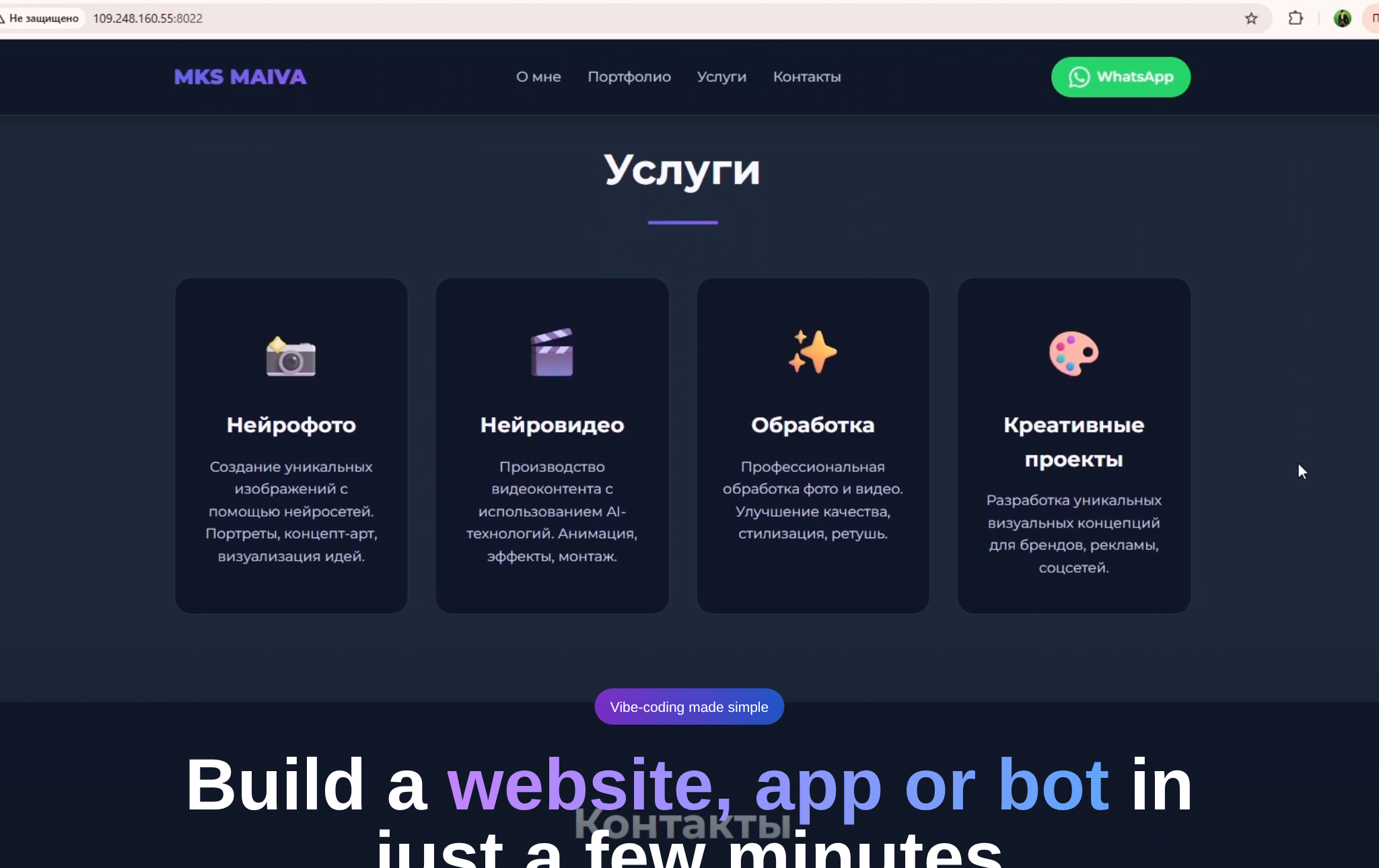
Client sites. The easiest entry. Local businesses constantly need simple websites: a services page with a lead form, a coffee shop menu, a craftsman's portfolio, a landing page for an online course. Vibe coding closes such projects in one or two evenings, while a simple landing page sells for a few hundred dollars on freelance marketplaces — and your direct costs are limited to tokens.
Prototypes and MVPs. Founders often need not "a website in general" but a working demo: to show an investor, test demand, let a partner click through the interface. Here vibe coding is nearly unbeatable on speed — a prototype with auth, a card list and a form assembles in an evening, and post-discussion edits take minutes.
Automations and internal tools. A Telegram booking bot, a script that sorts leads from email, a dashboard over a spreadsheet, a competitor price scraper. These are jobs full-time developers usually find too small — but the model writes such code in minutes, so they are quick money for you.
What a project costs you
Do the math before you name a price. On NeuralSpace there is no subscription — you pay only for the tokens you spend, and the price depends heavily on the model. A practical rule: run drafts and typical tasks on DeepSeek (it is tens of times cheaper than Claude and just as good for landing pages), and do the final review of complex code on Claude or ChatGPT.
Two numbers from real platform statistics. First: the average agent reply in the vibe-coding section is about 28 thousand tokens (based on 9,019 agent replies in the NeuralSpace log, data as of late October 2026). So a project with ten to fifteen edit iterations means hundreds of thousands of tokens — estimate the budget up front rather than discovering it mid-job. Second: hosting a published project costs 2 tokens per day (based on 432 "Project hosting" charges in the NeuralSpace transaction log over the last 30 days). That is pocket change for you, but you can honestly sell the client "a site on maintenance" with a small monthly fee — and that is recurring income, not a one-off order.
Where to find orders
Start with your immediate circle: founders you know, local shops and services with no site or with a five-year-old one. One evening project done through an acquaintance gives you what marketplaces cannot — a live portfolio and word of mouth. Then move to freelance platforms and founder communities; orders for landing pages and bots appear there daily.
While your portfolio is empty, build two or three showcase projects for fictional brands: a coffee shop, a stretching studio, a repair service. Links to working sites convince better than any words. And frame your offer through the outcome: not "I'll make a website" but "I'll build a page that collects leads into Telegram in three days" — that gets replies.
How to deliver an order on NeuralSpace: step by step
Everything happens in the browser, on the vibe coding page. The flow:
- Describe the project in plain words: "A one-page site for a coffee shop: menu with prices, photos, opening hours, a callback request form, warm tones." The more specific, the fewer iterations.
- Pick the model: DeepSeek for drafts and typical tasks, Claude or ChatGPT for complex logic. Switching takes one click in the same interface.
- Edit in iterations in the same thread: "make the header sticky", "add a reviews block", "the form should post to Telegram". The agent remembers the whole project context.
- Publish: the agent starts the server itself, and the project gets a public https address you can show the client right away — the client's own domain can be connected later.
- Grab site copy and images in the chat and the image generator; for automations with external services, the API gives you the same models programmatically.
New users receive starter tokens — enough to build your first showcase project and feel the burn rate. After that you pay per token with no subscription fee.
Honest limitations
Vibe coding removes the coding, not the client work. "I don't like this font" edits are your zone, and they should be a separate line in the quote from day one. Payment and CRM integrations deserve more scrutiny than landing pages: mistakes there cost more. And marketplace competition is real — the winners are not the cheapest but those who reply fast and show a working demo on day one.
FAQ
How much can you actually earn with vibe coding?
It is work, not passive income. A realistic start is a few orders a month on simple landing pages and bots at a few hundred dollars each; with a portfolio and recurring maintenance clients the total grows. Your direct costs are tokens plus 2 tokens per day of hosting for each published project.
Do I need to know how to code?
For sites, prototypes and simple bots — no: describe the task clearly and check the result. Understanding how forms, domains and hosting work helps you write better prompts and take higher-paying orders.
Which model should I pick for a client project?
Drafts and typical pages — DeepSeek: tens of times cheaper, and quality is sufficient for landing pages. Complex logic and the final review — Claude or ChatGPT. Your balance lasts several times longer at the same result.
Can I connect the client's own domain?
Yes: a project is published with a public https address immediately, and the client's custom domain can be attached in the project settings — the site stays on NeuralSpace hosting at 2 tokens per day.