AI video translation with dubbing: voice-over for YouTube clips
The short version (BLUF)
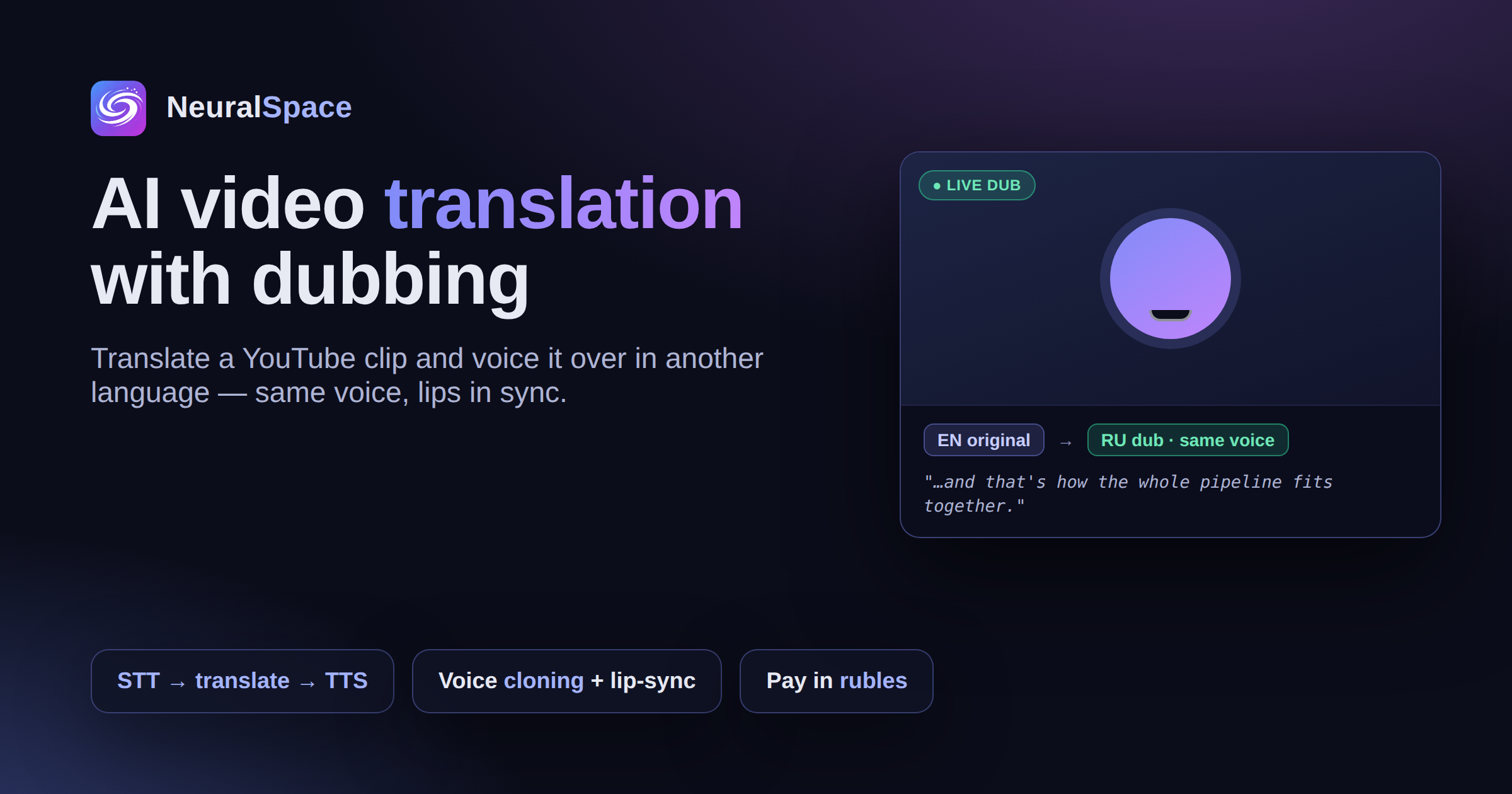
AI video translation does in minutes what a dubbing studio charges days for: it transcribes the speech, translates it and dubs the clip with a synthetic voice. How the process works, who needs it, and where the catch is.
A friend sent me a 40-minute English tutorial. Watch it with subtitles? No thanks. I ran it through AI dubbing — and 15 minutes later I had a Russian version. With a voice that sounds like the original. With lips moving in time. In 2026 this isn't science fiction anymore — it's a working pipeline.
How the process works
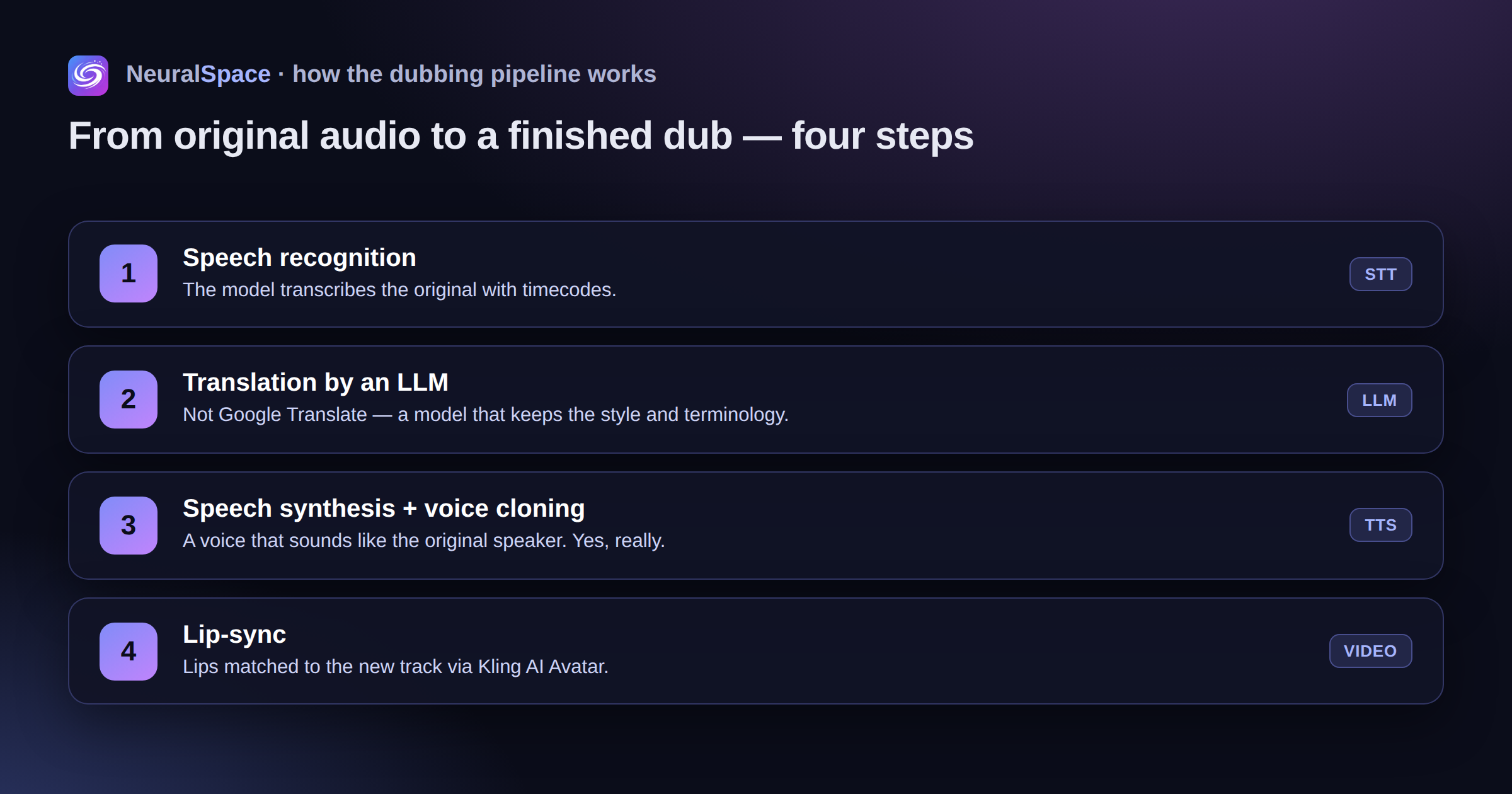
- Speech recognition (STT) — the model transcribes the original with timecodes
- Translation through an LLM — not Google Translate, but a model that keeps the style and the terminology
- Speech synthesis (TTS) with voice cloning of the original speaker. Yes, the voice will sound like them
- Lip-sync — matching the lips to the new track via Kling AI Avatar in the "Video" section
Who needs this
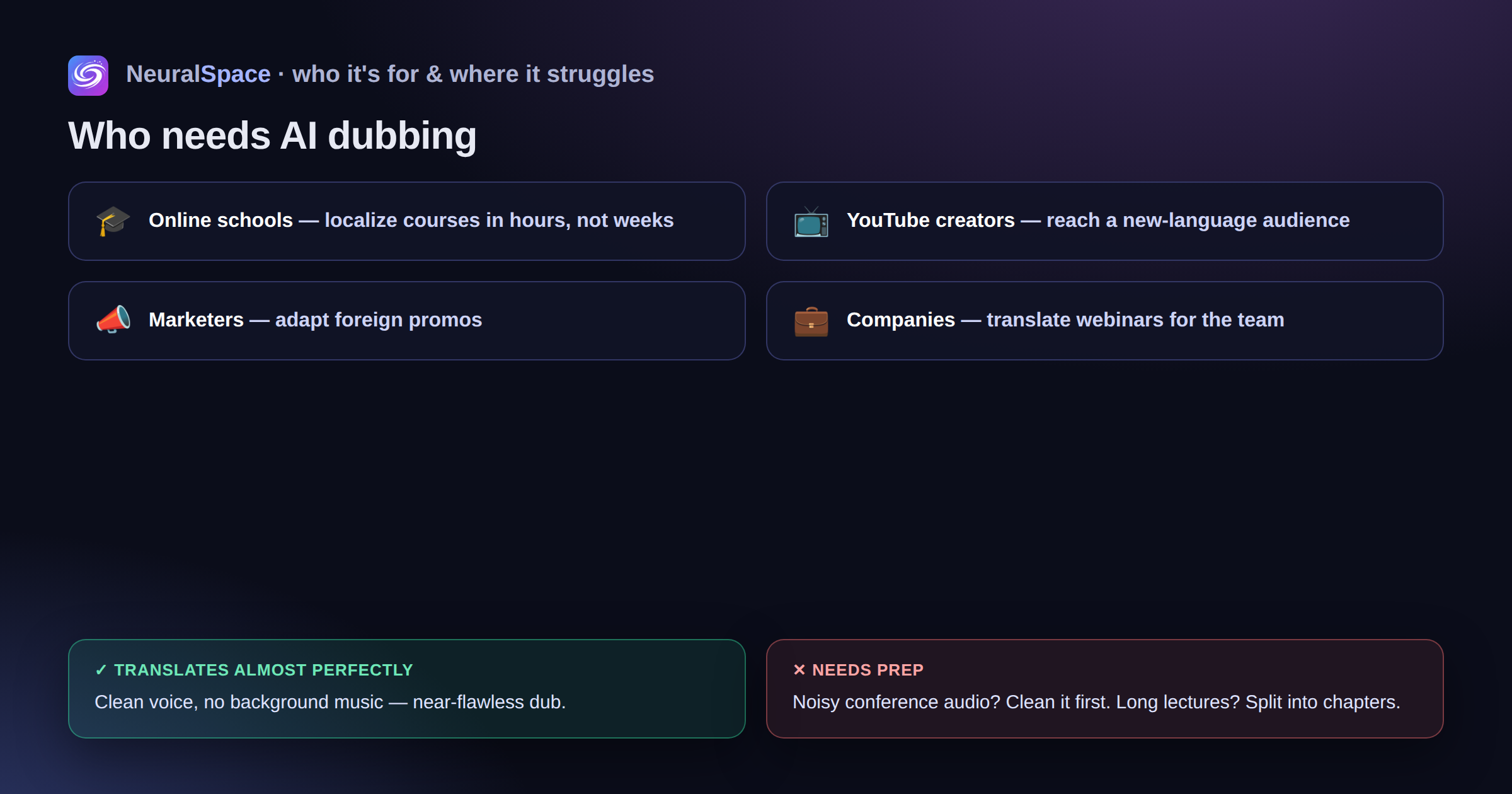
Online schools — localize courses in hours, not weeks. YouTube creators — reach a new-language audience. Marketers — adapt foreign promos. Companies — translate webinars for their teams. And it costs an order of magnitude less than studio dubbing.
Where the catch is
Quality depends heavily on the source. A clean voice with no background music translates almost perfectly. A noisy recording from a conference — you'll need to clean the audio first. And long lectures are better split into chapters and translated in parts — that way it's easier to keep the terminology consistent and avoid the translation "drifting" by the end.
How to do it in NeuralSpace
In NeuralSpace the whole pipeline lives in one place: upload a video — get back a translation with voice-over and subtitles. No juggling five different services. Pay in rubles, no foreign subscriptions. Try it on a short clip — the welcome tokens are enough for your first minutes of dubbing.
Frequently Asked Questions (FAQ)
Q: How do I get the best result from the AI?
A: Use detailed prompts (descriptions) in English; specify style and scene details.
Q: Can I use this content commercially?
A: Yes, all generated content belongs entirely to you.