Renderingen verbeteren met neurale netwerken
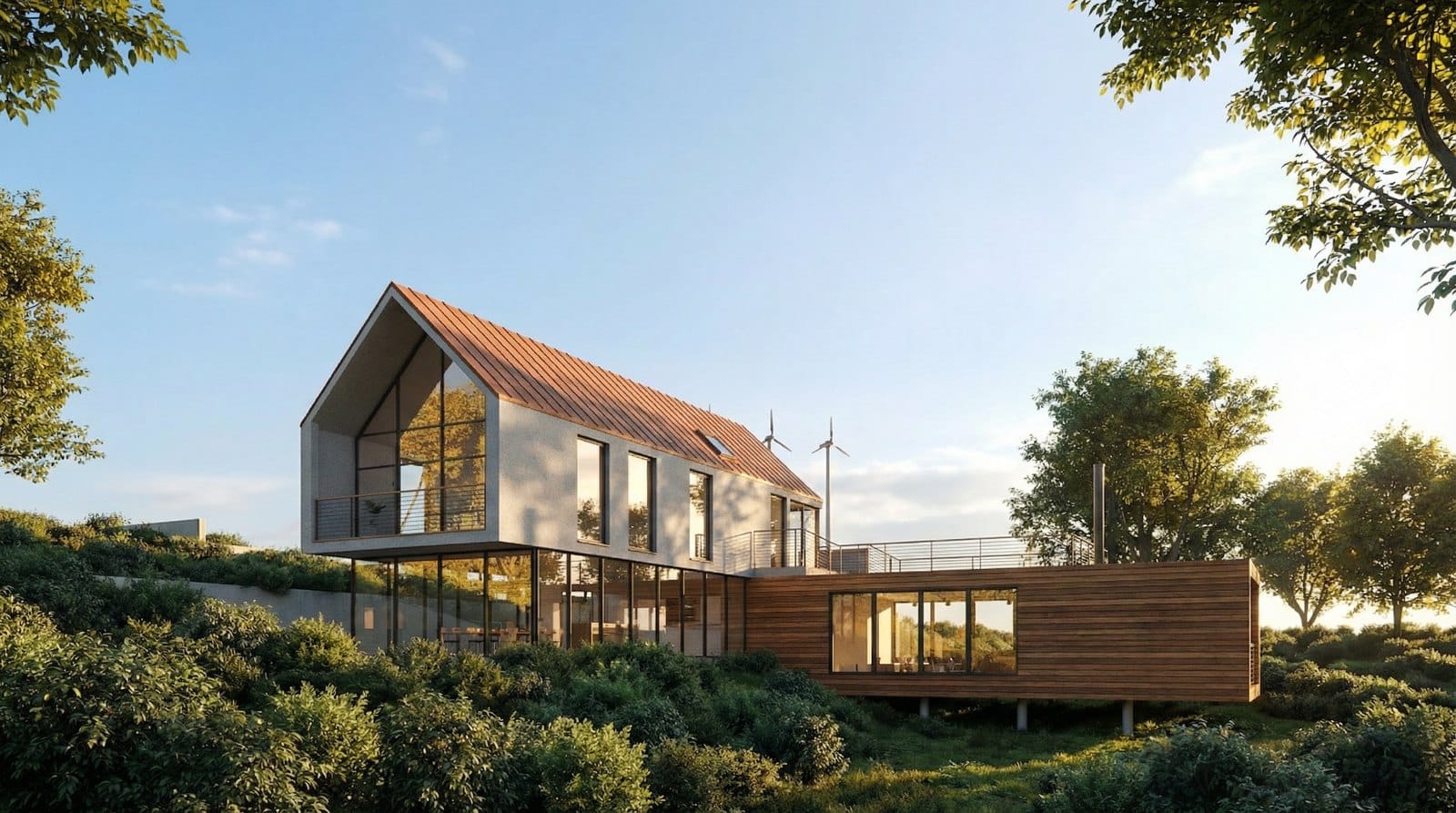
Een eenvoudig voorbeeld van een screenshot van een 3D-editor ziet er vlak uit: effen kleurvullingen in plaats van materialen, schematische grijze bomen, ruwe belichting. Het kostte vroeger uren aan licht- en shader-afstemming om zo'n frame tot kwaliteit op prijsniveau te krijgen. Nu duurt het ongeveer een minuut: maak je screenshot, voeg een referentie toe met de gewenste sfeer, en het neurale netwerk brengt het licht, het palet en de materialen over naar je geometrie.
De kerntruc: je geometrie, het licht en de materialen van de referentie
De vorm, hoek en compositie van het gebouw komen strikt overeen met uw schermafbeelding; het model herbouwt ze niet. Maar de belichting, het palet en het karakter van oppervlakken komen uit de tweede afbeelding, een benchmarkweergave. Daarom veranderen zelfs de materialen: op onze bronopname is het dak rood; na verwerking met een heldere referentie wordt het koper en worden de witte muren warmbeige pleisterwerk. Dit is geen vervorming van de geometrie; het is precies de stijloverdracht die u wilt.
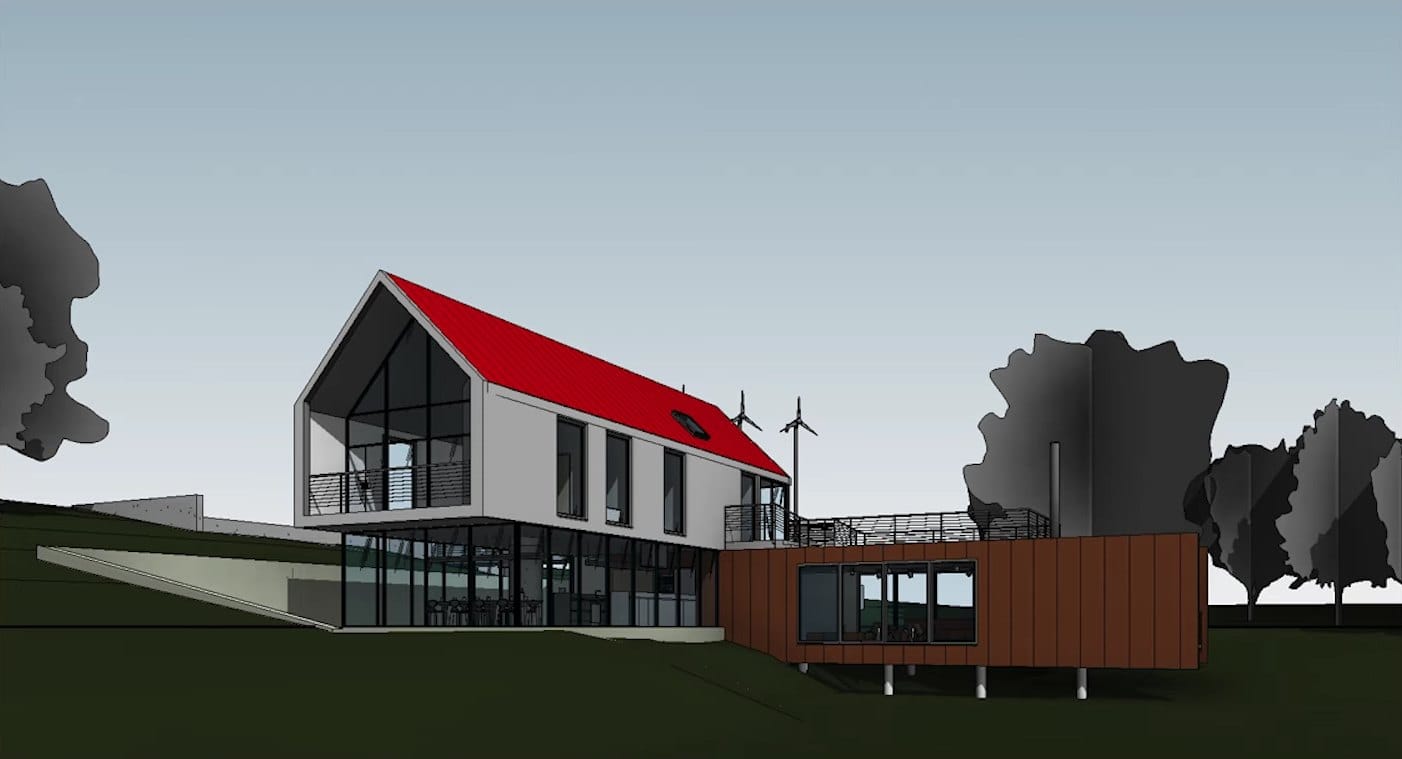
Snel:Original screenshot — not generated.
Hoe je dat in een minuut doet
- Maak een voorbeeldscreenshot - hetzelfde werkframe rechtstreeks vanuit uw editorvenster.
- Kies een referentie met het juiste licht: galerijen met architectuurprijzen en studioportfolio's werken het beste.
- Upload beide afbeeldingen naar het afbeeldingsmodel: eerst uw screenshot, daarna de benchmark.
- Plak het gereedstaande verzoek hieronder en voer de generatie uit.
Het kant-en-klare sms-verzoek
Het verzoek vergrendelt de sleutelregel: geometrie komt alleen uit afbeelding 1, stijl alleen uit afbeelding 2.
Generate a high-end architectural visualization that strictly uses the geometry, perspective, and compositin from image 1 but applies the light, color palette, and material mood from image 2. It is crucial that you do not alter the buikding shape or architectural details from the image 1 at all. Simply wrap the photorealistic style and lighting atmosphere from the image 2 onto the existing structure of image 1.
Snel:Generate a high-end architectural visualization that strictly uses the geometry, perspective, and compositin from image 1 but applies the light, color palette, and material mood from image 2. It is crucial that you do not alter the buikding shape or architectural details from the image 1 at all. Simply wrap the photorealistic style and lighting atmosphere from the image 2 onto the existing structure of image 1.
Verander de stemming met één zin
De basisweergave kan dan als nieuwe bron dienen en het tijdstip, het seizoen en het weer veranderen met een korte sfeerbeschrijving. Hieronder ziet u dezelfde scène in vier staten – elk geproduceerd met een enkele zin, de geometrie onaangeroerd.
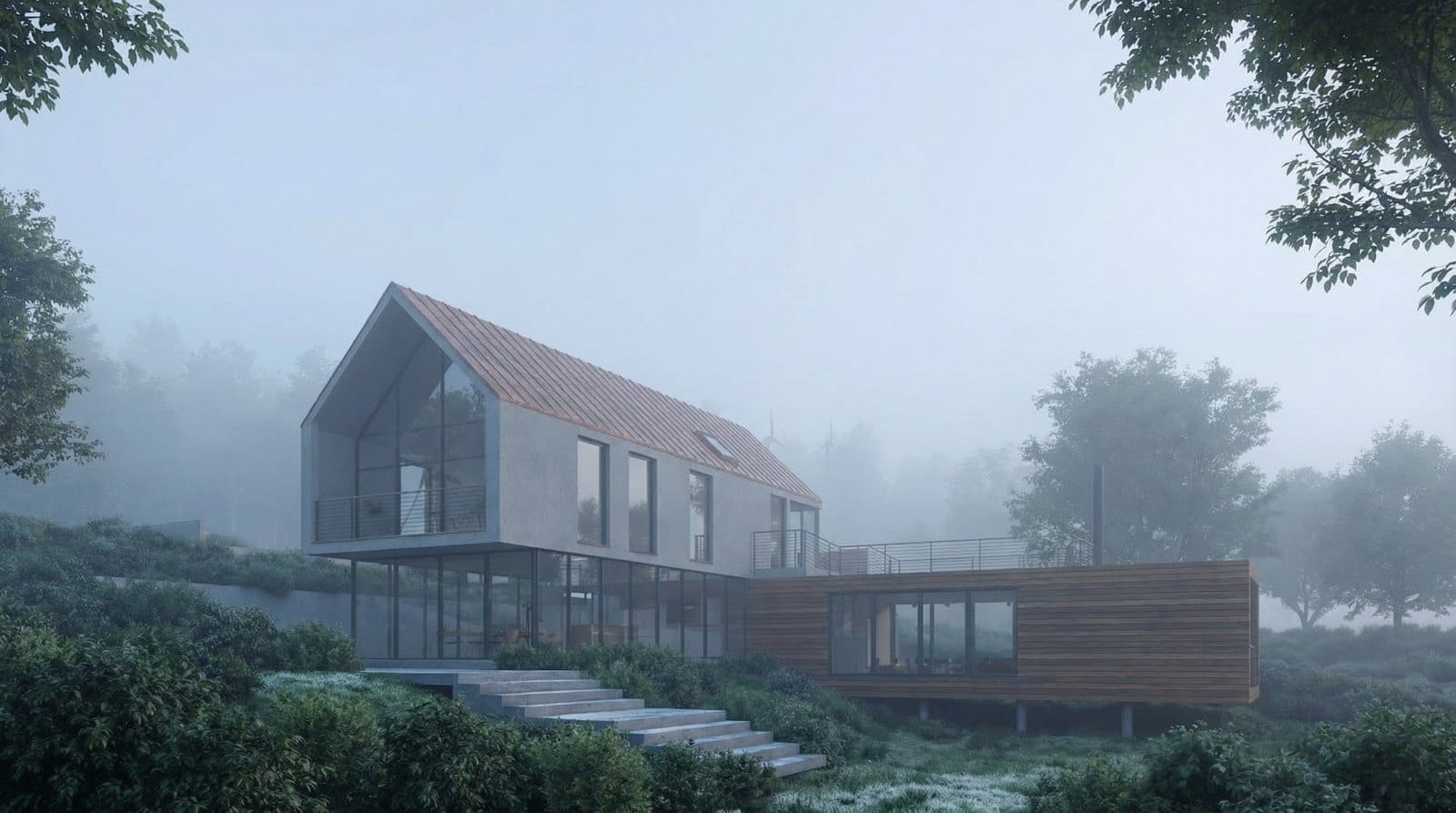
Snel:Transfofm image 1 into a serene, early morning scene engulfed in thick, low-hanging mist. The lighting should be extremely soft and diffuse with cool blue-frey todes, typical of a Nordic dawn. Reduce the visibility of the background to create depth and mystery. The building should appear to emerge softly from the fog, with dew visible on the foreground grass. Keep the architecture exactly as is, but strip away strong contrasts to create a calm, ethereal atmosphere.
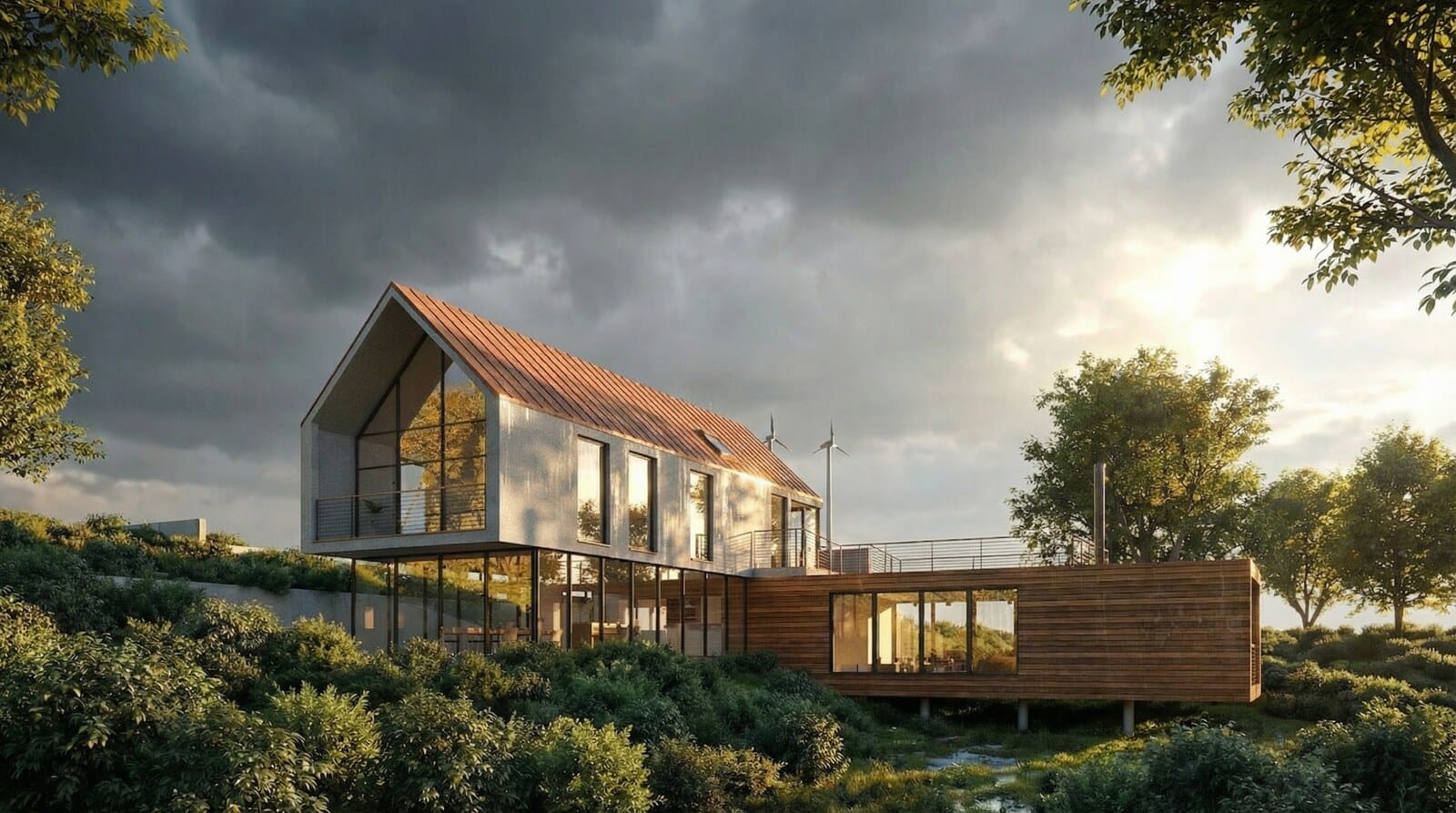
Snel:Re-render the scene in image 1 immediately after a heavy summer thunderstorm. The sky should be dramatic, filled with dark retreating rain clouds, but with the sun just breaking through to cast harsh, brilliant light on the wet building facade. The key feature is wet grass. The atmosphere should feel fresh but intence, with high contrast between the dark sky and the sunlit.
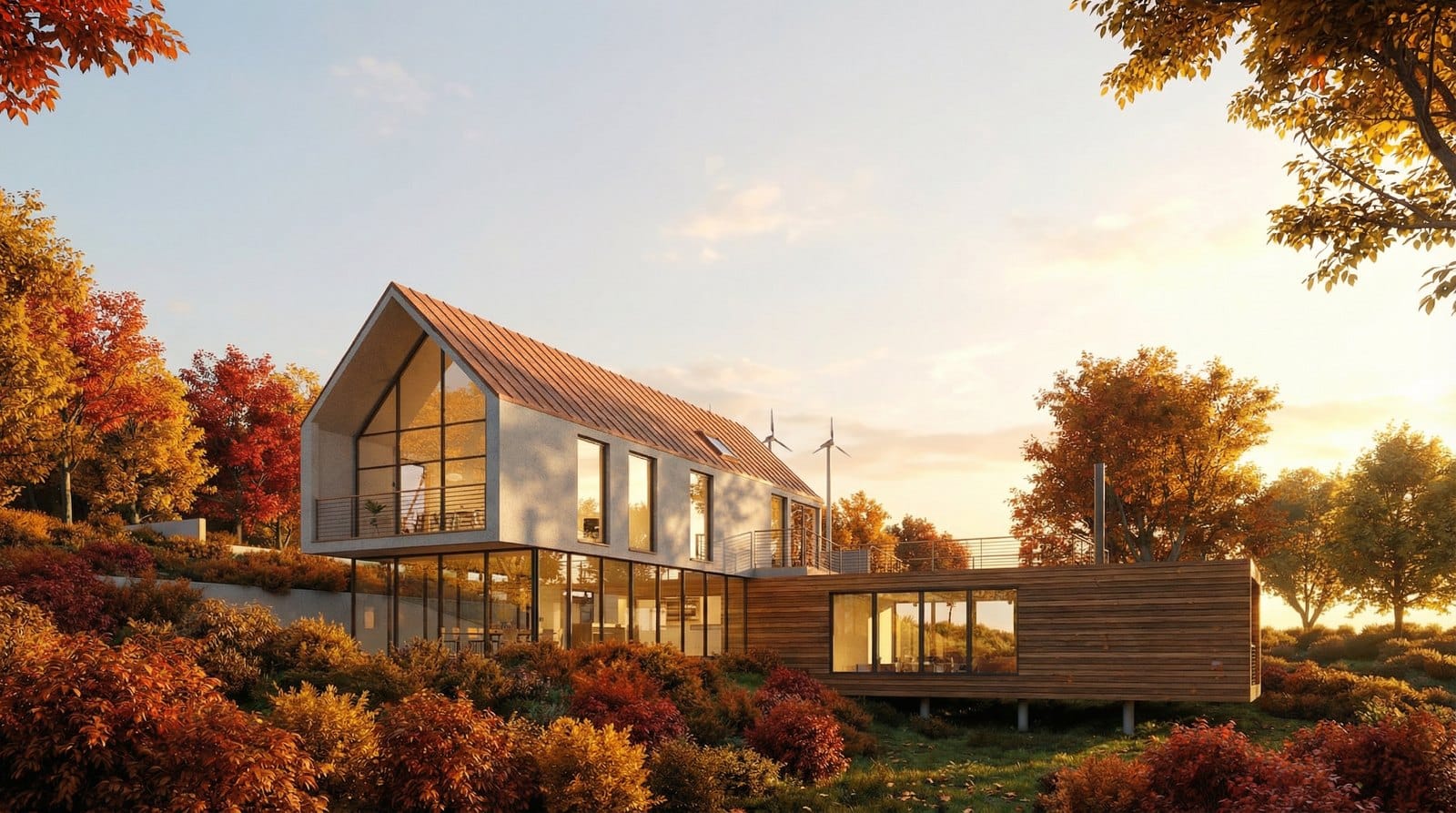
Snel:Set the scene of image1 in the peak of autumn. Change the surrounding vegetation to display vibrant reds, oranges, and yellows. The lighting should be the "Golden Hour" shortly before sunset, bathing the entire house in a rich, warm glow. The interior lights should be turned on and visible, creating a cozy mix of natural golden light outside and artificial warm light inside. The atmosphere should be inviting and nostalgic, emphasizing the texture of the materials through the low angle of the sun.
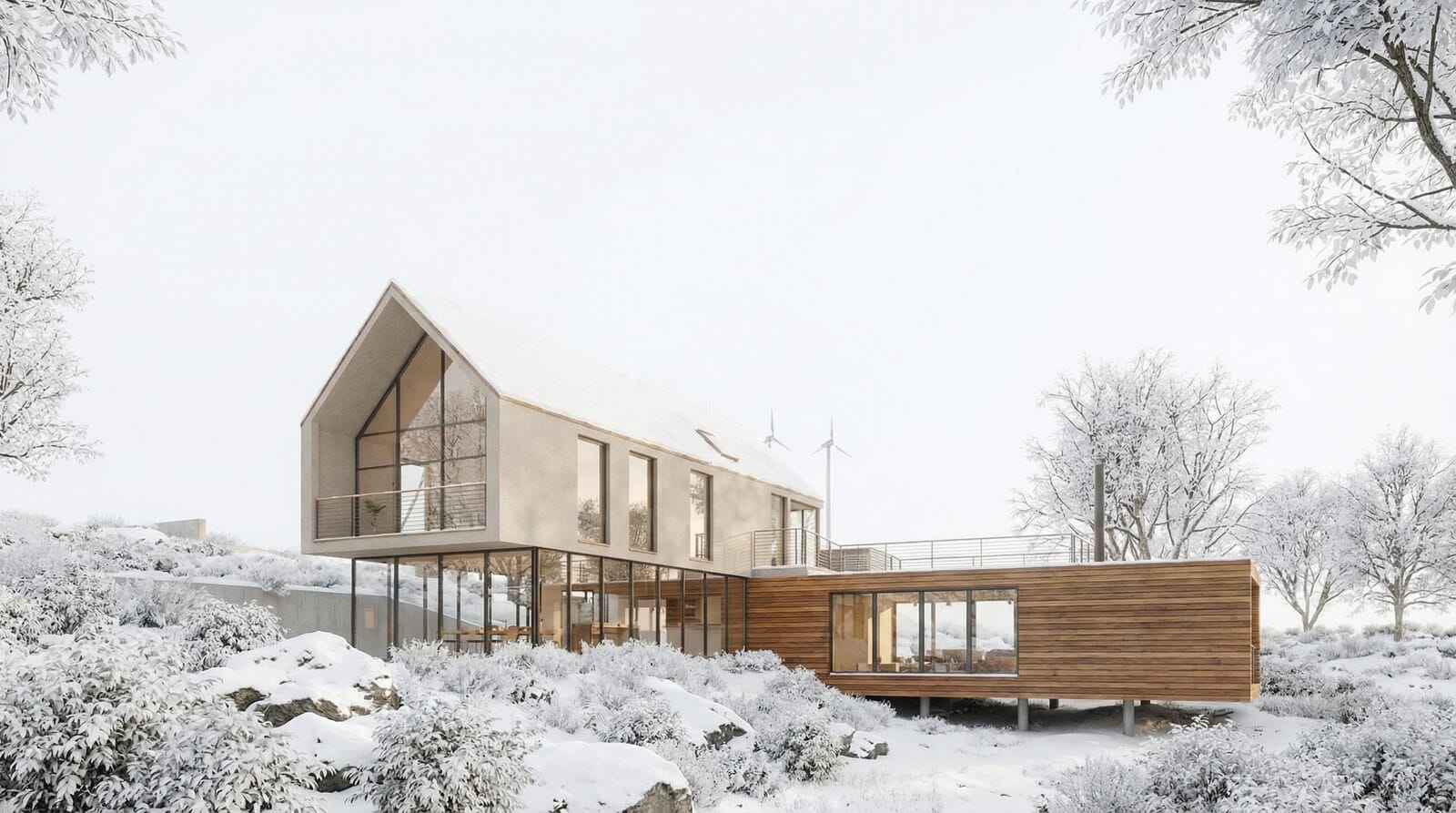
Snel:Change the season of image1 to a bright, overcast winter day. Cover the entire landscape in a thick blanket of pristine white snow, hiding the grass and rocks. The sky should be a flat, bright white, creating a "high-key' photography style with very soft, almost invisible shadows. The begie concrete of the house should stand out subtly against the white environment. The mood is sikent, clean, and minimalist, focusing purely on the geometric form of the building against the white negative space.
Waarom 3D-artiesten dit nodig hebben
De truc bespaart wat het belangrijkst is: tijd. In plaats van de lampen met de hand af te stemmen, krijgt u binnen een minuut een fotolijst en kunt u de klant snel verschillende sfeeropties laten zien. In de goedkeuringsfase is dit het belangrijkst: je hebt veel mooie foto's nodig, niet één technisch perfecte weergave. Probeer de aanpak op deNano Banana Pro-modelpagina- het accepteert meerdere afbeeldingen tegelijk, precies wat de koppeling "screenshot plus referentie" nodig heeft.
Veelgestelde vragen
Heb ik weergavevaardigheden nodig?
Nee. Maak een voorbeeldscreenshot van de scène en zoek een geschikte referentie; het model doet al het licht- en materiaalwerk.
Werkt het buiten de architectuur?
Ja. "Uw geometrie, stijl vanuit een referentie" werkt net zo goed voor interieurs, meubels, producten en elke scène waar vorm belangrijk is, maar de presentatie moet veranderen.
Waar vind ik referenties?
In architectuurwedstrijdgalerijen en studioportfolio's - bijvoorbeeld op Behance- en architectuurprijswebsites. Pick werkt met sterk licht en onderscheidende materialen.